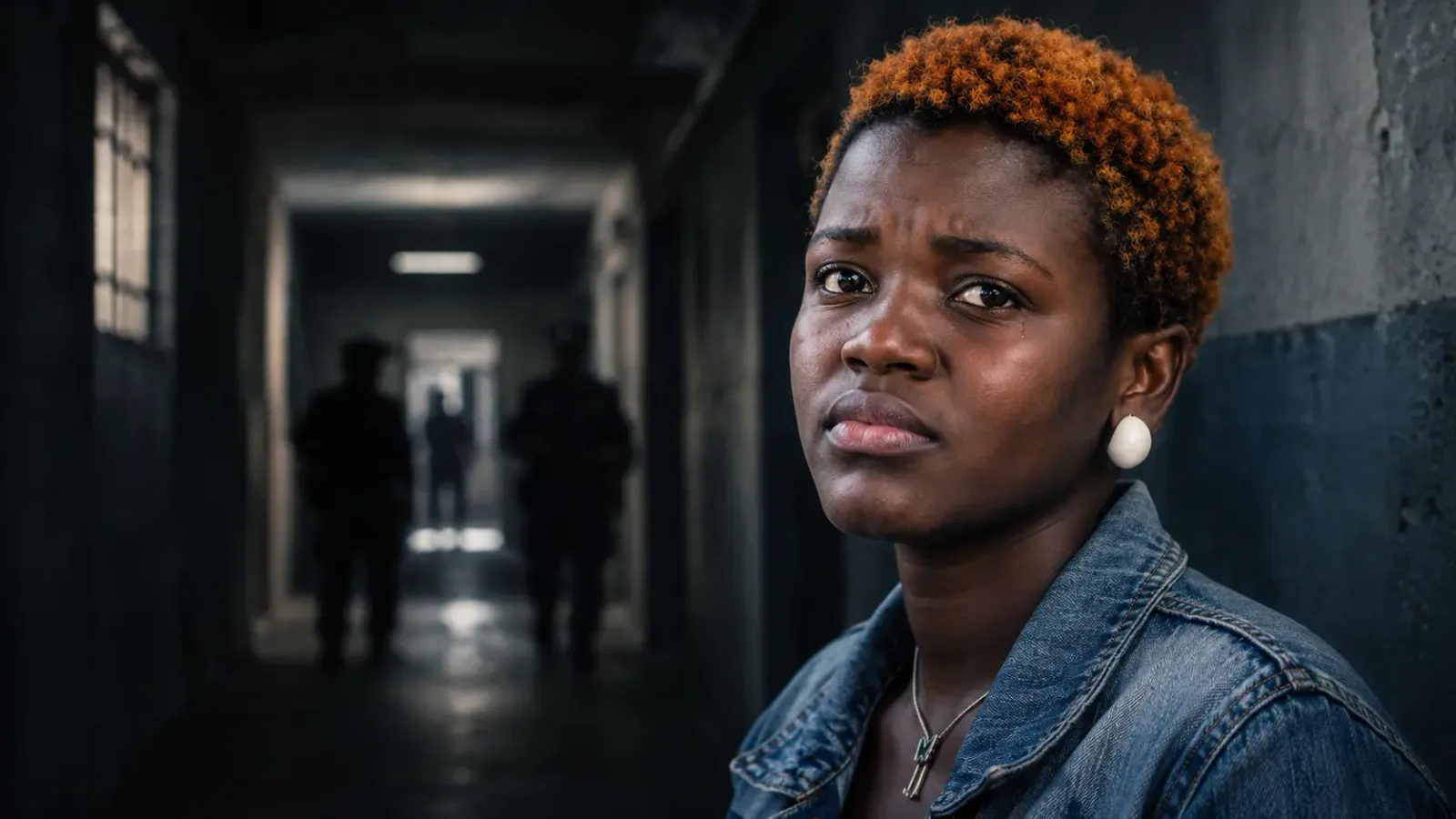
Praise Aloikin Opoloje: The Price of Speaking Out Against Power
What happens when a woman publicly challenges powerful people, questions the conduct of those who command the security forces, and refuses to be intimidated into silence? In a country governed by the rule of law, the answer should be straightforward: her rights must be protected, her criticism must be tolerated, and any allegation against her must be handled through a fair and transparent legal process.
The reported detention of Ugandan human-rights defender Praise Aloikin Opoloje raises a far more troubling set of questions.
In September 2026, Opoloje, a lawyer and outspoken critic of government conduct, reportedly found herself at the centre of a frightening confrontation with security personnel after publishing videos criticising General Muhoozi Kainerugaba, Uganda's Chief of Defence Forces. What followed prompted alarm among lawyers, activists and human-rights advocates, who questioned how she was taken into custody, whether she had been mistreated, and whether the authorities were using the machinery of the state to punish outspoken criticism.
This is not merely a story about one activist and one criminal charge. It is a case about the price citizens may pay when they challenge powerful institutions, the vulnerability of people placed in state custody, and the urgent need to ensure that no official stands above the law.
From Public Criticism to a Terrifying Ordeal
According to reporting by Uganda Radio Network and Daily Monitor, Opoloje was summoned to Namungoona Police Station on September 26, 2026. Her associates subsequently alleged that she was handed over to armed security personnel and taken away in a vehicle, while her whereabouts remained uncertain.
The circumstances were alarming enough to trigger demands from lawyers and fellow activists for authorities to account for her whereabouts and ensure her safety. The Uganda Law Society and other advocates raised concerns about the reported transfer from a police station to security personnel whose authority and actions were in dispute.
For a family, friends and colleagues, the disappearance of someone into an uncertain detention situation is not a political talking point. It is an experience of fear.
Where has she been taken? Is she safe? Can she contact her lawyer? Can her family establish that she is alive and being treated humanely? Who is responsible for her safety, and to whom can they turn for answers?
These are the questions that arise when a person's liberty is placed beyond the immediate reach of those who care about them.
No one should have to endure that uncertainty simply because they have criticised a public official. No family should have to search for answers while powerful institutions remain the subject of unanswered questions about a loved one's whereabouts.
A police station should be a place where the law is enforced, not a place where a person's protection under the law can seemingly disappear. Allegations that a detainee was transferred into the hands of unidentified or inadequately accounted-for security personnel demand a clear explanation and an independent investigation.
When Power Answers Criticism With Fear
Opoloje's reported detention followed videos in which she sharply criticised Muhoozi Kainerugaba and the exercise of political and military power in Uganda. The precise circumstances of her apprehension remain a matter requiring careful examination, but the timing raised serious concerns among human-rights advocates.
The danger is unmistakable: when public criticism is followed by a frightening detention, citizens may begin to wonder whether speaking honestly about those in authority is worth the personal risk.
That fear can spread far beyond the individual targeted. A student considering whether to question corruption may hesitate. A journalist investigating official misconduct may wonder whether the consequences will reach their family. An activist documenting alleged abuses may ask whether the law will protect them if powerful people take offence.
This is how intimidation can damage a society even beyond the immediate victim. It can make silence seem safer than speaking, submission more practical than protest, and injustice more difficult to challenge.
Critics may describe such a climate as tyrannical when power appears to be exercised through fear rather than accountability. But the essential question is not which label wins the argument. It is whether the conduct of public institutions respects the rights of the people they are meant to serve.
No military title confers ownership over the public. No official's status creates a personal right to be shielded from criticism. And no insult, however offensive an official might consider it, automatically extinguishes a citizen's right to due process.
The law must not become a weapon for protecting powerful people from embarrassment.
Allegations of Abuse Must Be Taken Seriously
Following the initial reports, an account published by The Investigator News on September 28 carried Opoloje's own allegations that she had been beaten and threatened after being forced into a vehicle. She described an ordeal in which she feared for her safety.
These are serious allegations. They should not be treated as judicially established findings without an independent investigation, but neither should they be dismissed or buried beneath the politics surrounding the case.
A person in custody is vulnerable. Their safety depends heavily on those exercising control over them. That is precisely why the prohibition against torture and cruel, inhuman or degrading treatment must be upheld without exception.
If the allegations of beatings and threats are substantiated, those responsible must face lawful accountability. Investigators should establish who took custody of Opoloje, where she was held, what happened during the period in question, and whether officials failed to protect her rights.
If authorities dispute her account, the appropriate response is evidence, transparency and a credible inquiry—not intimidation or silence.
Human dignity cannot depend on a person's political connections, public reputation or relationship with those in power. It cannot be withdrawn because someone has spoken harshly about a general, a minister or a president.
A detainee remains a human being. That principle is not negotiable.
A Criminal Charge and Questions About Freedom of Expression
On September 28, Opoloje appeared before the Buganda Road Chief Magistrate's Court. She was charged in connection with the alleged unlawful use of a SIM card registered in another person's name, and she denied the accusation. Reporting by New Vision indicated that the prosecution alleged the SIM card had been used for an illegal purpose connected to online activity.
A charge is an allegation, not a conviction. Opoloje is entitled to the presumption of innocence, access to legal representation, adequate time and facilities to prepare her defence, and a fair hearing.
The circumstances also raise a broader question: are the authorities addressing a genuine, properly evidenced alleged offence, or is the criminal process being used in a way that could punish or deter protected expression?
That question must be answered through a transparent judicial process, not decided by political loyalty or public anger. The evidence should be examined, the applicable law scrutinised, and the proceedings conducted fairly.
On October 14, 2026, the court granted Opoloje bail after she had spent more than two weeks on remand. Her release on bail was an important development, but it did not resolve the underlying criminal case or settle the allegations surrounding her treatment.
Bail does not erase the fear of detention. It does not independently establish whether mistreatment occurred. Nor does it answer every question about how a human-rights defender came to be in custody.
Those questions remain worthy of serious scrutiny.
The Public Has a Right to Demand Accountability
Praise Aloikin Opoloje received the European Union Human Rights Defenders Award in 2025 in recognition of her work on civil liberties, accountability, social justice and anti-corruption. Her case therefore concerns not only her individual rights but also the wider environment in which human-rights defenders carry out their work.
A society cannot credibly claim to respect justice while treating those who demand accountability as though they are enemies of the state. Criticism is not treason. Disagreement is not a licence for abuse. And the dignity of a citizen is not conditional on that citizen praising those who govern.
When allegations of unlawful detention or mistreatment arise, the public deserves answers. The authorities should account for the chain of custody, explain the legal basis for every restriction on liberty, ensure access to lawyers and family, and investigate credible allegations of abuse independently.
Where wrongdoing is established, responsibility must follow. Where charges are brought, they must be proved through a fair process. Where officials act unlawfully, their position must not become a shield against accountability.
This is what equal justice requires.
We Demand Justice, Not Intimidation
The case of Praise Aloikin Opoloje leaves a message that should concern every person who believes that freedom and human dignity matter.
A citizen should not have to calculate the risk of being taken away before deciding whether to speak. A family should not have to fear that a loved one might become unreachable after entering a police station. An activist should not have to choose between silence and the possibility of mistreatment.
And a powerful official should never be permitted to treat criticism as a personal offence that the security apparatus must avenge.
We demand truth about the circumstances of Opoloje's detention. We demand an independent investigation into the allegations of abuse. We demand due process, respect for freedom of expression, and accountability for every official found to have acted unlawfully.
This is not a demand for anyone to stand above the law. It is a demand that the law stand above everyone.
The tyrannical use of power, wherever it occurs, must be confronted through evidence, public scrutiny, lawful resistance and institutions that refuse to surrender their independence. The answer to alleged abuse is not another act of vengeance. It is truth, justice and accountability.
Praise Aloikin Opoloje has been granted bail, but the deeper questions raised by her case cannot be dismissed simply because she has left prison. Her rights still matter. The allegations still deserve investigation. The proceedings still require fairness.
A country belongs to its people, not to the officials who temporarily exercise authority over them. Its laws should protect the vulnerable, restrain the powerful and make justice possible even when the person seeking it is an outspoken critic of the state.
No one should be punished for demanding accountability. No official should be beyond scrutiny. And no person's suffering should be forgotten because the powerful would prefer silence.