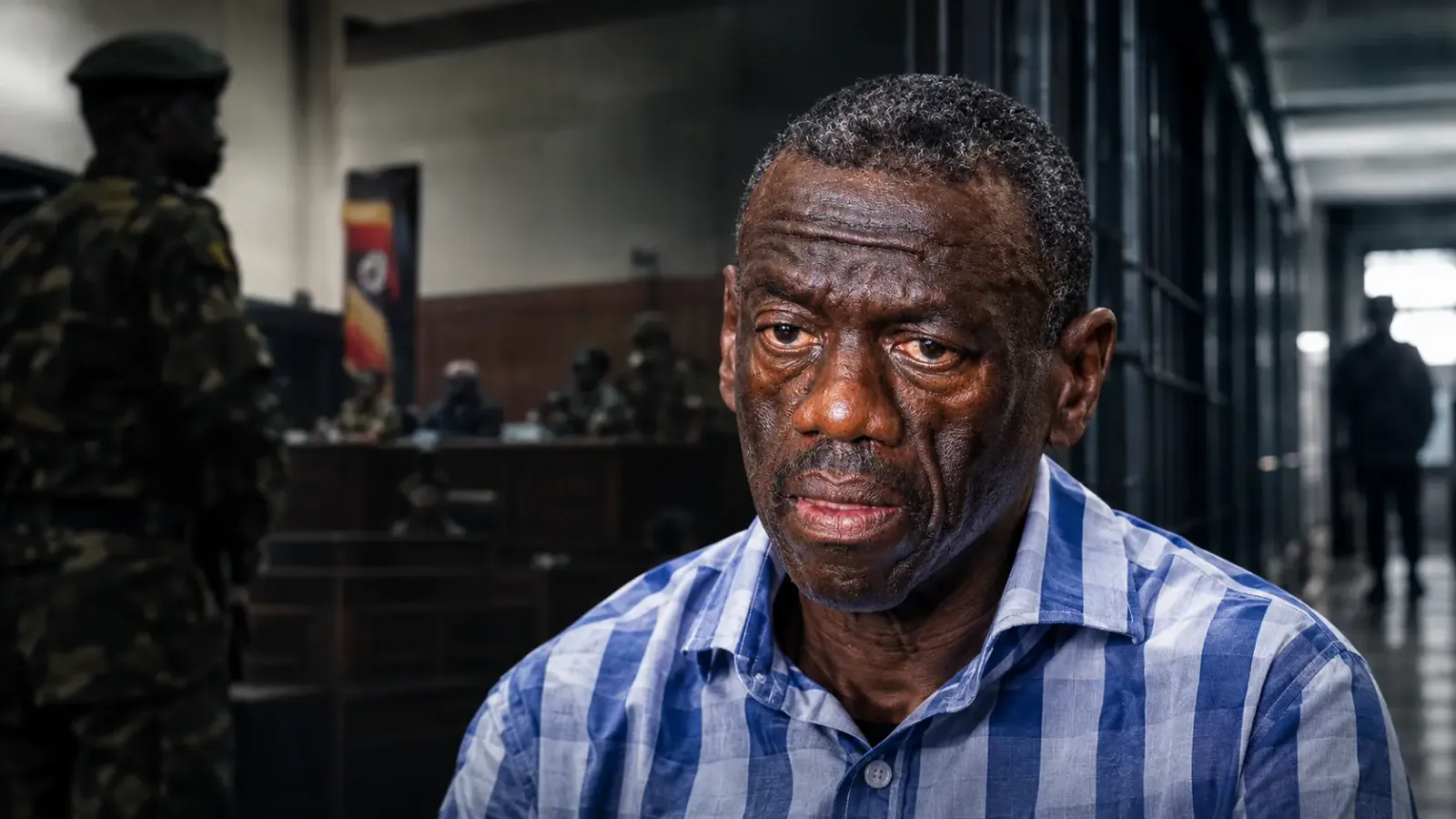
Kizza Besigye: Abducted Across Borders, Detained, and Denied the Fight for Justice
On 16 November 2024, Dr. Kizza Besigye, one of Uganda's most prominent opposition figures, reportedly disappeared in Nairobi, Kenya. Four days later, he reappeared in Kampala before Uganda's military court.
For his family, supporters and human-rights advocates, the circumstances raised an urgent question: how could a civilian opposition leader reportedly disappear in a neighbouring country and then emerge in military custody across the border?
Besigye's case became more than a legal battle over criminal charges. It became a test of the protections owed to every person under the law, the limits of state power, and the right of political opponents to challenge those who govern them without fear of unlawful detention.
The allegations surrounding his transfer from Kenya, his prosecution before a military tribunal and the continuing fight over his rights demand serious scrutiny. No government should be exempt from answering difficult questions about how it takes people into custody and how it treats them afterward.
A Disappearance in Nairobi
Besigye was in Nairobi when he reportedly disappeared on 16 November 2024. His wife, Winnie Byanyima, publicly raised the alarm, saying he had been taken and demanding to know where he was being held.
The uncertainty lasted until 20 November, when Besigye appeared before Uganda's General Court Martial in Kampala. He was charged alongside political associate Haji Obeid Lutale with offences including unlawful possession of firearms and ammunition and other security-related allegations.
Besigye denied the charges.
The abrupt transition from reported disappearance in Kenya to military proceedings in Uganda triggered serious concern from human-rights organizations and political figures. Amnesty International described the incident as an abduction and called for his release, arguing that the circumstances violated international human-rights protections and proper extradition procedures.
Kenyan authorities said they were investigating how Besigye had been taken from Nairobi. Ugandan officials, meanwhile, rejected the characterization of state actions as abductions and maintained that arrests and legal proceedings were handled through lawful processes.
These competing accounts make a transparent, credible examination of the circumstances essential. The central questions cannot simply be brushed aside: who took Besigye, under what authority was he transferred across the border, and what legal safeguards protected him during that process?
A Civilian Before a Military Court
Besigye's appearance before a military tribunal deepened the controversy.
He was a retired military officer and a civilian political opposition figure at the time of these proceedings. He challenged being tried before a military court, maintaining that he was not serving in the military and should be tried through the civilian justice system.
The issue goes to the heart of a fundamental principle: military power must not become a substitute for independent civilian justice.
A criminal accusation does not erase a person's rights. Even when authorities allege serious offences involving weapons or national security, the accused remains entitled to due process, legal representation, a fair hearing and protection against arbitrary detention.
The allegations against Besigye must be assessed through lawful proceedings and evidence. They must not be treated as proof of guilt simply because charges have been filed. Equally, the state must answer legitimate questions about the circumstances of his detention and the court empowered to hear his case.
Justice cannot be measured solely by whether a prosecution moves forward. It must also be measured by whether the process respects the law.
The Human Cost of Prolonged Detention
Behind the legal filings and courtroom arguments is a human being whose freedom, security and future have been placed at the centre of a prolonged dispute.
Detention separates people from their families, disrupts ordinary life and leaves loved ones waiting for answers that may never arrive quickly enough. For families facing uncertainty over a detained relative's health, safety and access to justice, every new court date can bring fresh anxiety.
Besigye's wife, Winnie Byanyima, publicly expressed fears that he would not receive a fair trial. His lawyers and supporters also raised concerns about his detention and legal treatment.
These concerns deserve serious attention, not dismissal as political noise.
The state has the power to arrest, charge and imprison under lawful authority. That power carries an equally serious obligation to safeguard the rights and dignity of every person in custody. Where allegations of unlawful transfer, incommunicado detention or other rights violations arise, independent investigation and effective remedies are essential.
No person's suffering should be treated as an acceptable price for political confrontation.
The Legal Battle Continues
Besigye's case has continued through Uganda's courts, with the legality of his detention and the conduct of the proceedings remaining contested issues.
In a significant development on 8 July 2026, Uganda's High Court dismissed an application brought by Besigye and another applicant seeking to nullify and terminate the criminal trial on the basis of alleged human-rights violations. The court ordered the trial to proceed.
That decision is an important part of the legal record. It should not, however, be misrepresented as a definitive finding that every allegation surrounding Besigye's reported abduction or detention was false, nor as proof that all aspects of his treatment complied with human-rights standards. The application's dismissal and the underlying allegations are distinct matters.
The wider questions remain consequential: what happened in Nairobi, whether the transfer complied with applicable law, whether the proceedings meet fair-trial standards, and what remedies are available for any rights violations established through appropriate legal processes.
Those questions require evidence, transparent judicial scrutiny and accountability—not intimidation, assumptions or political slogans.
Political Opposition Is Not a Crime
Besigye has spent decades challenging Uganda's political leadership. He has contested presidential elections, criticized the government and become one of President Yoweri Museveni's most persistent opponents.
That history gives his case substantial political significance, but it does not by itself establish that the criminal charges against him are politically motivated. Such claims must be examined against the evidence and the conduct of the authorities.
The principle at stake is broader than one politician.
In any society governed by the rule of law, opposition leaders, journalists, activists and ordinary citizens must be able to criticize those in power without losing the protection of their fundamental rights. Where criminal charges are brought, they must be supported by evidence and handled through fair, independent procedures.
National security must not become a blank cheque for state power. Nor should political rivalry determine who receives the full protection of the law.
A justice system earns public trust when it applies the same standards to the powerful and the powerless, to government supporters and its fiercest critics alike.
The Questions Authorities Must Answer
The seriousness of this case demands clear answers and meaningful safeguards.
- The reported abduction: Who was responsible for taking Besigye from Nairobi, and what legal authority governed his transfer to Uganda?
- Cross-border accountability: What did the relevant authorities in Kenya and Uganda know, authorize or investigate about the circumstances of his transfer?
- The right to a fair trial: Are the proceedings conducted before a court with proper jurisdiction, with full respect for the rights of the accused?
- Conditions of detention: Has Besigye received appropriate access to lawyers, medical care, family contact and other protections guaranteed by law?
- Accountability for violations: If unlawful conduct is established, will those responsible face an effective and impartial process?
These are not unreasonable demands. They are basic questions that arise whenever a person's liberty is taken away under circumstances that generate credible concerns about legality and due process.
We Demand Justice, Transparency and Accountability
The case of Kizza Besigye must not disappear beneath the weight of court paperwork, political arguments or the passage of time.
A reported abduction across national borders is a grave matter. The detention of a civilian opposition figure before a military tribunal raises consequential legal questions. Allegations of rights violations require careful investigation, and criminal charges require a fair hearing based on evidence.
The pursuit of justice must be firm, principled and impartial. Besigye is entitled to the protections of the law regardless of his political identity. The authorities are entitled to pursue legitimate criminal charges, but only through lawful procedures that respect the rights of the accused.
The demand is straightforward: transparency about what happened, respect for due process, appropriate remedies for any established violations, and accountability wherever wrongdoing is proven.
No government should be too powerful to answer questions. No detention should place a person beyond the protection of the law. And no political dispute should be allowed to erase the dignity and fundamental rights of a human being.
Justice must be more than a promise made by those who hold power. It must be a protection that people can actually rely on even when the person demanding it is one of the government's most determined critics.